



Introduction
Climate change is fundamentally a water crisis: it is altering the entire hydrological cycle, making water more scarce, more unpredictable and more polluted through intensifying floods, droughts, glacier melt, sea-level rise and water‑related disasters that threaten ecosystems, economies and societies alike.1 These growing climate‑related water risks cut across river basins, aquifers, deltas, cities, farms, industries and energy systems, amplifying existing vulnerabilities and forcing ever tougher choices about how water is allocated between people, food, energy, nature and the economy.2 Complicating the issue, different human induced influences on climate and nature, such as greenhouse gas driven warming, deforestation and land use change, and air pollution, are all affecting the hydrological cycle and water availability, but often with different patterns across regions, seasons and risk factors. At the same time, water is increasingly recognised as a “climate connector” and lever for resilience, because integrated, sustainable water management can simultaneously drive climate adaptation, reduce disaster risk, safeguard water‑dependent carbon sinks and enable low‑carbon, climate‑resilient development across sectors and scales.3 In this context, cross‑sector partnerships on water—linking climate, environment, agriculture, energy, cities, finance, and social sectors—are indispensable to convert water‑related risks into opportunities for systemic climate resilience in line with the Paris Agreement, the 2030 Agenda and emerging water‑climate initiatives.4
Objective
The objective is to co-create actionable pathways for cross-sector partnerships that advance water security in a climate-resilient world. Specifically, the Dialogue seeks to surface innovative models of multi-stakeholder and multi-level collaboration that deliver resilient water services, protect ecosystems and enhance climate adaptation and mitigation; to raise awareness of the multiple interconnecting pathways linking human influences on natural systems to changes in water availability; to identify governance, regulatory, and financing reforms such as shared-risk public–private arrangements and climate-resilient investment frameworks that can be scaled and replicated; and to align national and local partnership platforms with global commitments under SDGs, the Paris Agreement, regional water–climate frameworks, and upcoming COP30 water and climate agendas.
MINISTERIAL ADDRESS |
|
Dr. Raj Bhushan Chaudhary  |
|
 Dr. Raj Bhushan Choudhary is an Indian doctor-turned-politician and the Minister of State for Jal Shakti in the Narendra Modi government. He holds MBBS and MD degrees and began his political career in 2019 with the Vikassheel Insaan Party before joining the BJP in 2022. Dr. Choudhary is known for his dynamic leadership and commitment to public service. In 2024, he was elected as a Member of Parliament from Muzaffarpur with a record margin of over 234,000 votes. Associated with organizations like RSS and Nishad Vikas Sangh, he has also served as the Bihar Unit President of the National Association of Fishermen.
|
|
Eminent Speaker |
| Dr. Arvind Kumar |
Mr. Satya S. Tripathi |
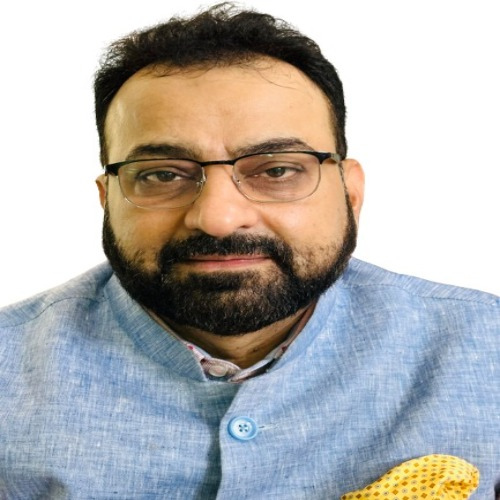 Dr. Arvind Kumar is a strategist and key-influencer in development sector with more than 31+ years of experience as an author, columnist, Water and Human Rights Pro-activist, and specializes in concepts like ecosystem-based adaptation, water-energy-food nexus, with specific emphasis on Transversal approach of inter-linkages between water, environment and SDGs. He has published over 500 plus research articles and several books. He is a proud recipient of Achievers Award for his contribution to the Environment from International Human Rights Organization in collaboration with United Nations Information Centre, India. Dr. Arvind Kumar is a strategist and key-influencer in development sector with more than 31+ years of experience as an author, columnist, Water and Human Rights Pro-activist, and specializes in concepts like ecosystem-based adaptation, water-energy-food nexus, with specific emphasis on Transversal approach of inter-linkages between water, environment and SDGs. He has published over 500 plus research articles and several books. He is a proud recipient of Achievers Award for his contribution to the Environment from International Human Rights Organization in collaboration with United Nations Information Centre, India. |
 Mr. Satya S. Tripathi is Secretary-General of the Global Alliance for a Sustainable Planet. A development economist, lawyer and changemaker with over 40 years of varied experience, Mr. Tripathi is also the Chancellor of Kalinga Institute of Social Sciences – and Senior Distinguished Fellow on Innovative Finance at the World Agroforestry Centre. He has served with the UN for more than two decades in key positions and was most recently the UN Assistant Secretary-General, Head of New York Office at UN Environment and Secretary of the UN Environment Management Group. Mr. Satya S. Tripathi is Secretary-General of the Global Alliance for a Sustainable Planet. A development economist, lawyer and changemaker with over 40 years of varied experience, Mr. Tripathi is also the Chancellor of Kalinga Institute of Social Sciences – and Senior Distinguished Fellow on Innovative Finance at the World Agroforestry Centre. He has served with the UN for more than two decades in key positions and was most recently the UN Assistant Secretary-General, Head of New York Office at UN Environment and Secretary of the UN Environment Management Group. |
| Dr. Marianne Tronstad Lund | Dr. Bjorn Hallvard Samset |
|
|
|
| Mr. Kwame Ofori | Ms. Milloni Doshi |
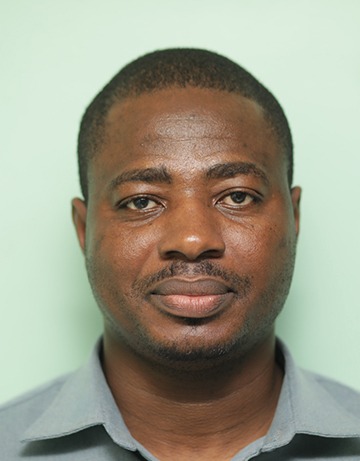 Mr. Kwame Ofori, Executive Director, AKO Foundation He is executive director and founder for Ako Foundation is an ICT Auditor and serves as the one of the initiators for the IPEN Youth Initiative. He is the Vice President for Ecosystem based Adaptation for food security in Africa Assembly (EBAFOSA)-Ghana and also the co-convener for the African Youth SDGs Summit and Achievers Award. Kwame is practically focused on the role of youth in Climate Change Adaptation and agricultural chemical input in Agribusiness. His interests are community-based and youth-led project development and implementation. Mr. Kwame Ofori, Executive Director, AKO Foundation He is executive director and founder for Ako Foundation is an ICT Auditor and serves as the one of the initiators for the IPEN Youth Initiative. He is the Vice President for Ecosystem based Adaptation for food security in Africa Assembly (EBAFOSA)-Ghana and also the co-convener for the African Youth SDGs Summit and Achievers Award. Kwame is practically focused on the role of youth in Climate Change Adaptation and agricultural chemical input in Agribusiness. His interests are community-based and youth-led project development and implementation. |
|
| Ms. Daile (Iris) Zeng | Ms. Shweta Tyagi |
 Ms. Daile (Iris) Zeng, is a PhD student in the Faculty of Forestry & Environmental Stewardship at the University of British Columbia (UBC), where she works with the Forest Carbon Research Lab. Her doctoral research focuses on integrated watershed carbon management under climate change, examining how watershed-scale carbon flows, land-use dynamics, socioeconomic development can support more credible and community-responsive nature-based climate solutions. Daile completed her undergraduate studies in Natural Resources Conservation at UBC and obtained her MSc degree from UBC’s Faculty of Forestry, where she examined the effectiveness of planning and management strategies in improving biophysical and socioeconomic conditions at the watershed level. Her academic work is closely connected to water security, ecosystem resilience, and integrated watershed management, with an emphasis on linking scientific evidence with practical policy and management decisions. She has also built science-to-policy experience through COP-related work and international engagement on nature-based solutions, climate change, and restoration, including leadership in the International Forestry Students’ Association and participation in multiple IUFRO conferences. Ms. Daile (Iris) Zeng, is a PhD student in the Faculty of Forestry & Environmental Stewardship at the University of British Columbia (UBC), where she works with the Forest Carbon Research Lab. Her doctoral research focuses on integrated watershed carbon management under climate change, examining how watershed-scale carbon flows, land-use dynamics, socioeconomic development can support more credible and community-responsive nature-based climate solutions. Daile completed her undergraduate studies in Natural Resources Conservation at UBC and obtained her MSc degree from UBC’s Faculty of Forestry, where she examined the effectiveness of planning and management strategies in improving biophysical and socioeconomic conditions at the watershed level. Her academic work is closely connected to water security, ecosystem resilience, and integrated watershed management, with an emphasis on linking scientific evidence with practical policy and management decisions. She has also built science-to-policy experience through COP-related work and international engagement on nature-based solutions, climate change, and restoration, including leadership in the International Forestry Students’ Association and participation in multiple IUFRO conferences. |
 Ms. Shweta Tyagi is Chief Functionary, India Water Foundation. She is results-focused development sector professional with a 23 years of demonstrated history and a proven ability to manage project teams to deliver multiple projects and programmes across diverse sectors of sustainable Development, Water and Sanitation, Social Development, Livelihood Generation, climate change etc. Excellent knowledge of project management and strategic planning of partnership creation and coordination, as well as advising decision-makers and strengthening capacities. Experience of Natural Resource management among rural communities for implementing. Ms. Shweta Tyagi is Chief Functionary, India Water Foundation. She is results-focused development sector professional with a 23 years of demonstrated history and a proven ability to manage project teams to deliver multiple projects and programmes across diverse sectors of sustainable Development, Water and Sanitation, Social Development, Livelihood Generation, climate change etc. Excellent knowledge of project management and strategic planning of partnership creation and coordination, as well as advising decision-makers and strengthening capacities. Experience of Natural Resource management among rural communities for implementing. |
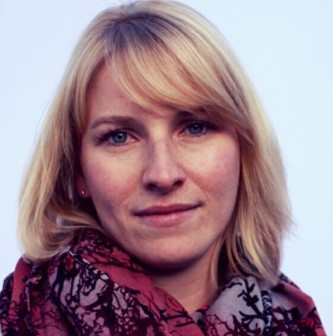
 Dr. Bjørn Hallvard Samset, Research Professor, CICERO Video Address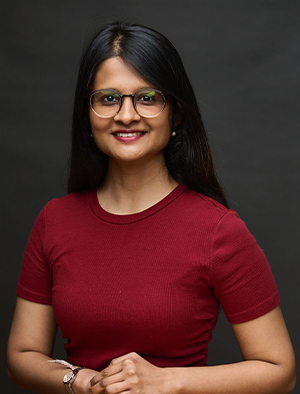
For more details please contact –
Ms. Shweta Tyagi
Chief Functionary
India Water Foundation
Email: shweta.tyagi@indiawaterfoundation.org
Mobile: +91 9899819074