

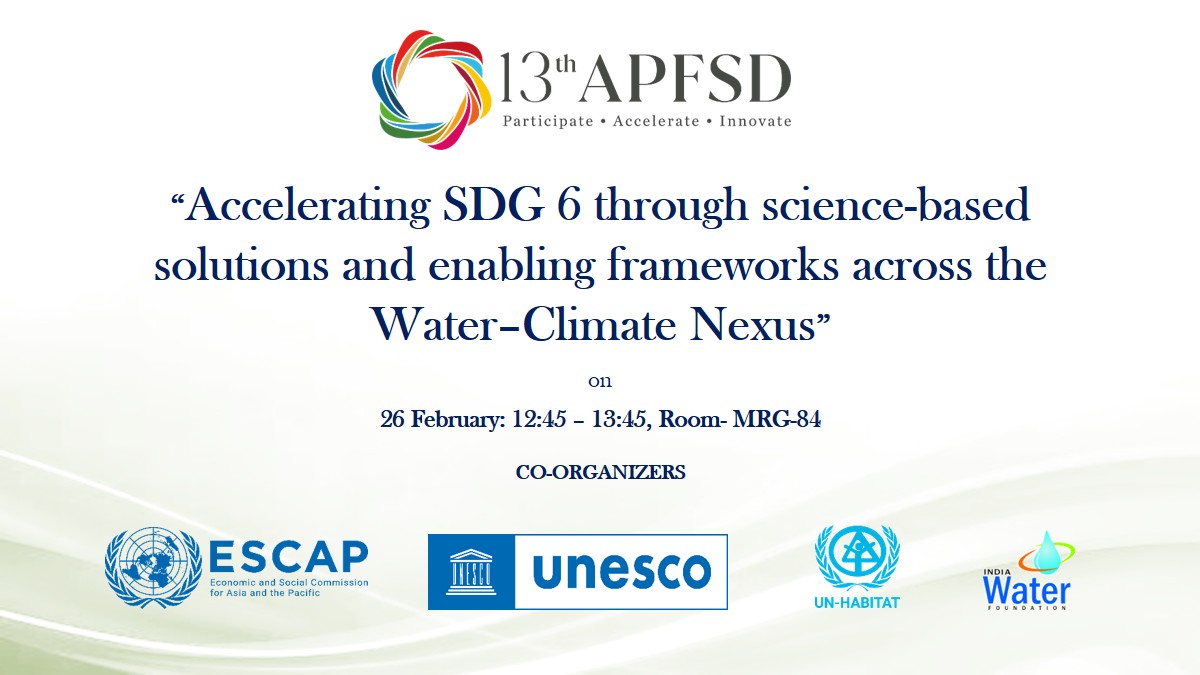
Background and Rationale
Sustainable Development Goal 6 seeks to ensure the availability and sustainable management of water and sanitation for all by 2030. Progress remains off track in many countries in the Asia-Pacific region, due to growing climate pressures, ecosystem degradation, rapid urbanization, fragmented governance and persistent financing gaps. Water is not only a sectoral issue but a critical connector across climate action, ecosystem health, disaster risk reduction, and inclusive development.
In line with the theme of the 13th Asia-Pacific Forum on Sustainable Development, this session will explore how transformative, coordinated, and innovative actions can accelerate progress on SDG 6 by linking concrete, science-based solutions with the enabling conditions required to scale them. The session brings together United Nations entities and India Water Foundation to present a coherent narrative from solutions to scale.
Session Focus and Structure
The session is designed around two interlinked layers.
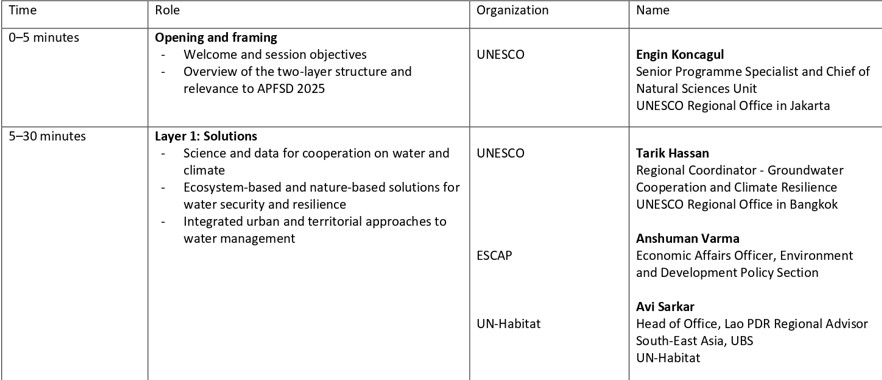
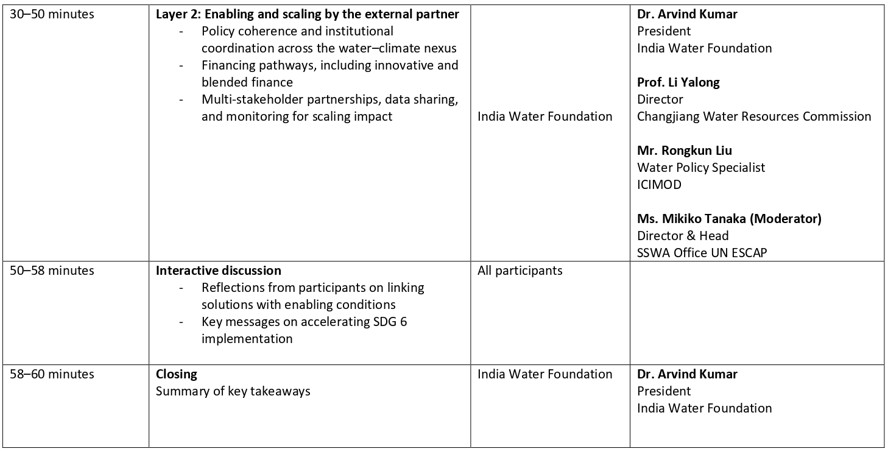
The first layer will focus on solutions, led by UNESCO, the United Nations Economic and Social Commission for Asia and the Pacific (ESCAP), and UN-Habitat. It will highlight how scientific cooperation, data exchange, ecosystem-based and nature-based approaches, and integrated urban and territorial planning can strengthen water governance, restore water-related ecosystems, and enhance resilience across the water–climate nexus. Particular attention will be given to shared river basins, water-related ecosystems, and regional platforms that support cooperation and joint action.
The second layer will focus on enabling and scaling, led by India Water Foundation. It will address the policy, institutional, financial, and partnership frameworks required to take these solutions to scale. This includes integrated and coherent policy approaches, innovative and blended financing mechanisms, strengthened cross-sectoral and multi-stakeholder partnerships, and improved data sharing and monitoring to support evidence-based decision-making and investment.
Guiding questions
Layer 1: Solutions
- How can scientific cooperation and data sharing strengthen joint action on water and climate challenges, including in shared river basins?
- How can ecosystem-based and nature-based approaches restore and sustain water-related ecosystems while supporting climate resilience and inclusive development?
- How can regional and urban platforms support the implementation of integrated water solutions on the ground?
Layer 2: Enabling and scaling
- How can integrated and coherent policy frameworks better align water, climate, urban and ecosystem agendas at national and regional levels?
- What innovative and blended financing mechanisms can help bridge investment gaps and sustain water and climate-resilient infrastructure and ecosystems?
- How can cross-sectoral and multi-stakeholder partnerships accelerate scaling, replication, and monitoring of successful SDG 6 solutions?
Expected outcomes
The session will generate shared insights on how science-based and nature-positive water solutions can be effectively enabled and scaled through coherent policies, adequate financing, and strong partnerships. It will contribute practical messages on accelerating SDG 6 implementation across the water–climate nexus, with relevance to SDGs 6, 13, and 17.
Tentative Agenda: